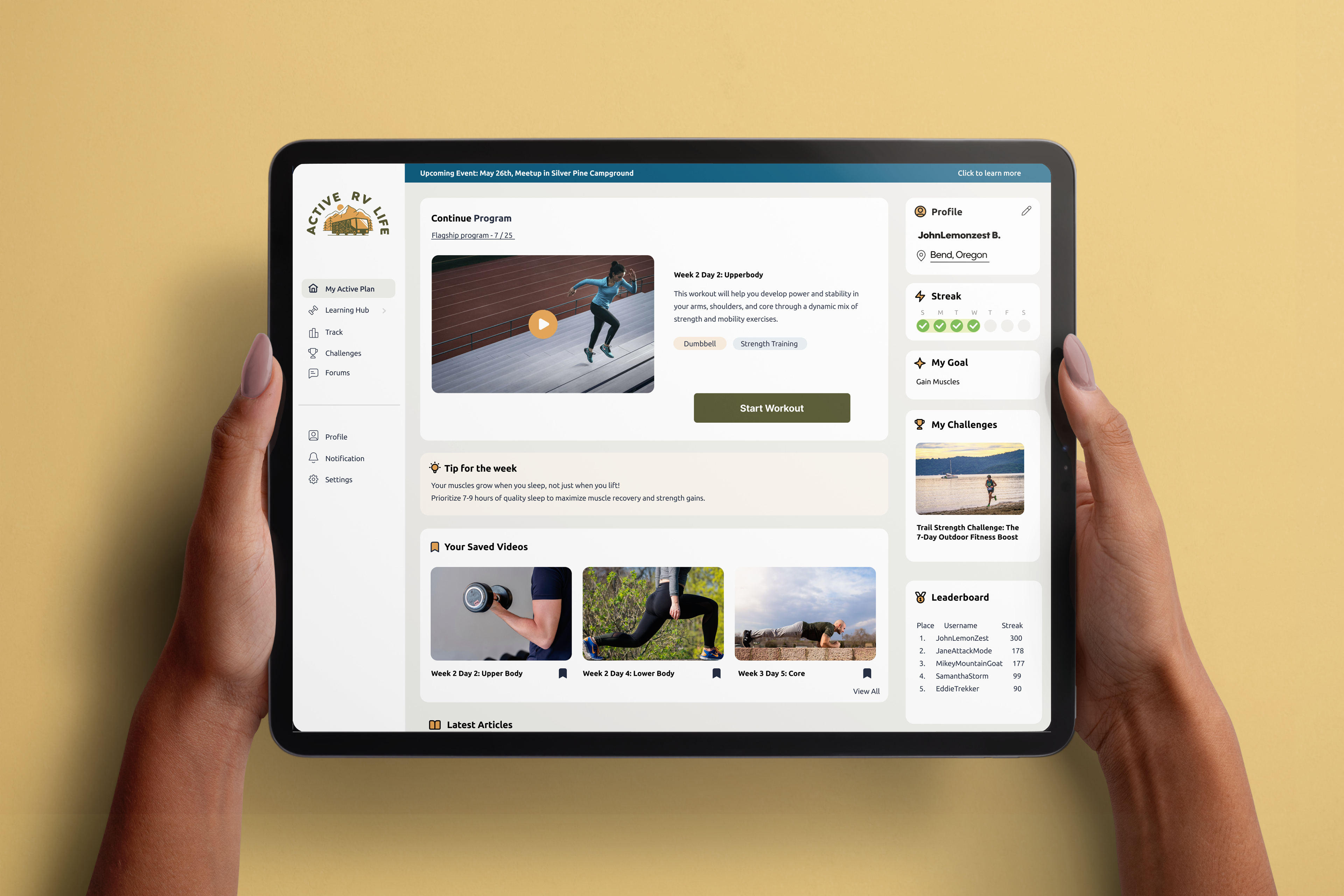
Active RV is a fitness platform designed to support older adults pursuing active retirement lifestyles through RV travel and life on the road. I led UX research, product strategy, wireframing, and prototyping efforts to help shape an adaptable workout experience built around the realities of RV living.

Role
UX Researcher & Product Designer
Team
Rivers Agile: Product Manager, Engineer, Content Manager
Client
Active RV
Project Type
Product Design, UX Research, MVP Strategy
Tags
Fitness, Healthy Aging, Travel Lifestyle, Research-Driven Design, Mobile Experience

01 Overview
Active RV is a fitness platform designed to support older adults pursuing active retirement lifestyles through RV travel and life on the road.
The project explored how digital fitness experiences could better adapt to the realities of RV living — including changing environments, limited workout space, inconsistent connectivity, and evolving health and mobility needs.
I led early UX discovery and product design efforts, translating research insights into product direction, wireframes, and interactive prototypes for MVP exploration.
02 The Challenge
Many older adults turn to RV travel after retirement in search of a more active and adventurous lifestyle. However, traditional fitness programs are often built around stable routines, reliable internet access, and full-service gyms — conditions that rarely reflect life on the road.
The team wanted to explore how a fitness experience could better support strength, mobility, and healthy aging for older adults pursuing RV and travel-focused lifestyles.
My Role
I led the project’s UX discovery and early product design process, conducting market research, competitor analysis, user interviews, synthesis, wireframing, and prototyping.
My work focused on translating research findings into product flows, interface concepts, and MVP recommendations that could support development and stakeholder discussions.
I collaborated closely with the founding team throughout the discovery and early product definition process.

03 Research & Discovery
I approached the project through early-stage UX discovery to better understand the lifestyle, fitness habits, and environmental constraints of older adults pursuing RV travel and active retirement lifestyles.
Research activities included:
• Market and competitor analysis of fitness platforms, RV-focused brands, and wellness programs
• Review of product offerings, business models, and onboarding experiences
• User interviews with RV travelers and active older adults
• Early concept exploration and product direction recommendations for the founding team
• Market and competitor analysis of fitness platforms, RV-focused brands, and wellness programs
• Review of product offerings, business models, and onboarding experiences
• User interviews with RV travelers and active older adults
• Early concept exploration and product direction recommendations for the founding team
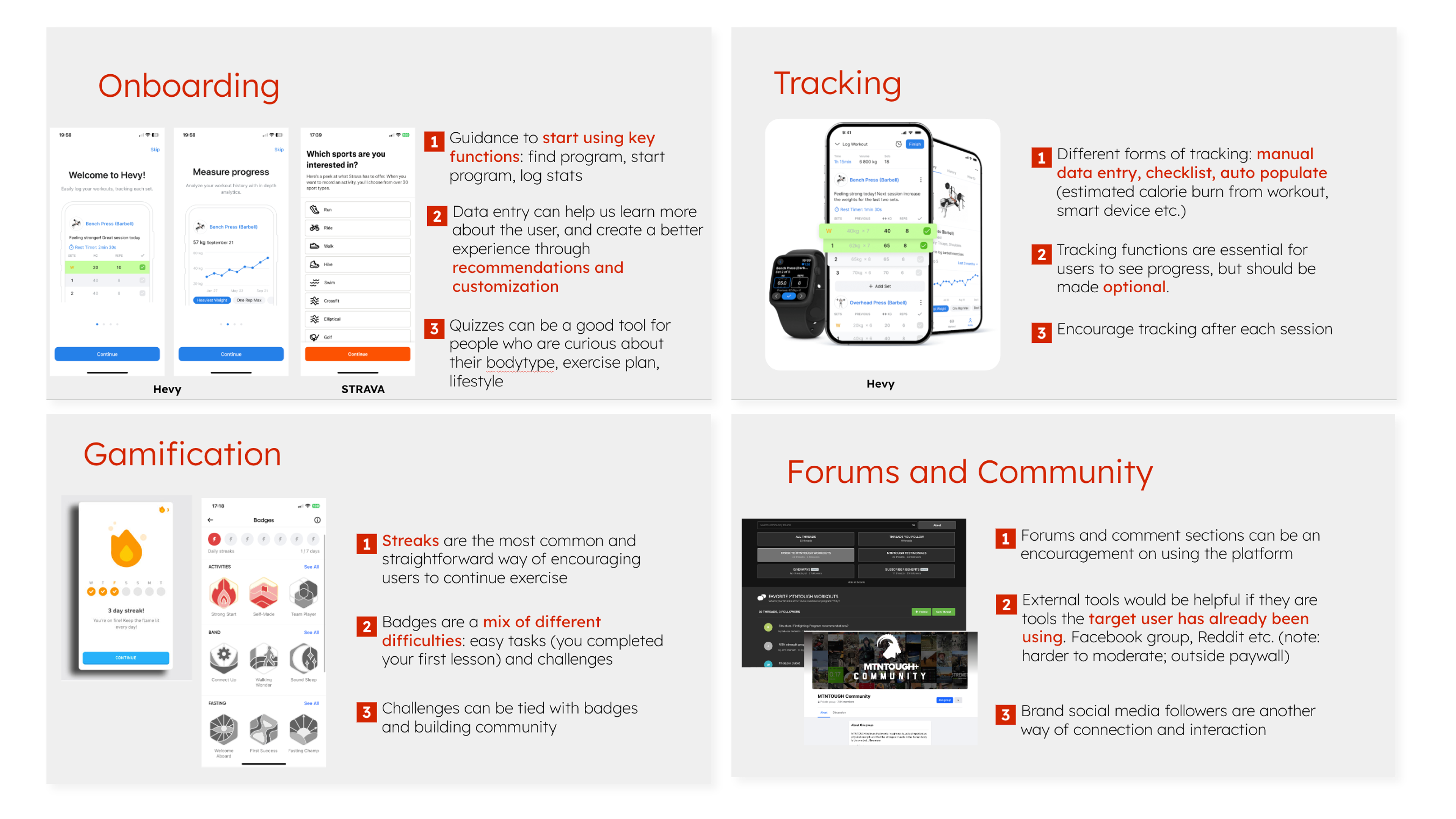
Comparative Analysis of functionality used in different fitness products on the market.
Qualitative Interviews & Insights
I conducted user interviews to better understand how fitness routines changed while living or traveling in RVs. Conversations focused on workout habits, environmental limitations, equipment access, motivation, and how users balanced fitness with travel and exploration.
Interviewees included:
• Older adults transitioning into RV or travel-focused retirement lifestyles
• Active RV travelers and van-life users
• Individuals focused on hiking, outdoor recreation, and mobility-focused fitness
• Older adults transitioning into RV or travel-focused retirement lifestyles
• Active RV travelers and van-life users
• Individuals focused on hiking, outdoor recreation, and mobility-focused fitness
Key takeaways:
• Limited space and changing environments made traditional workout routines difficult
• Internet connectivity could not be assumed in campgrounds and remote locations
• Users relied heavily on bodyweight workouts and portable equipment
• Fitness was viewed as a way to maintain independence, mobility, and exploration
• Community features were valuable to some users, but needed to feel optional and authentic
• Limited space and changing environments made traditional workout routines difficult
• Internet connectivity could not be assumed in campgrounds and remote locations
• Users relied heavily on bodyweight workouts and portable equipment
• Fitness was viewed as a way to maintain independence, mobility, and exploration
• Community features were valuable to some users, but needed to feel optional and authentic
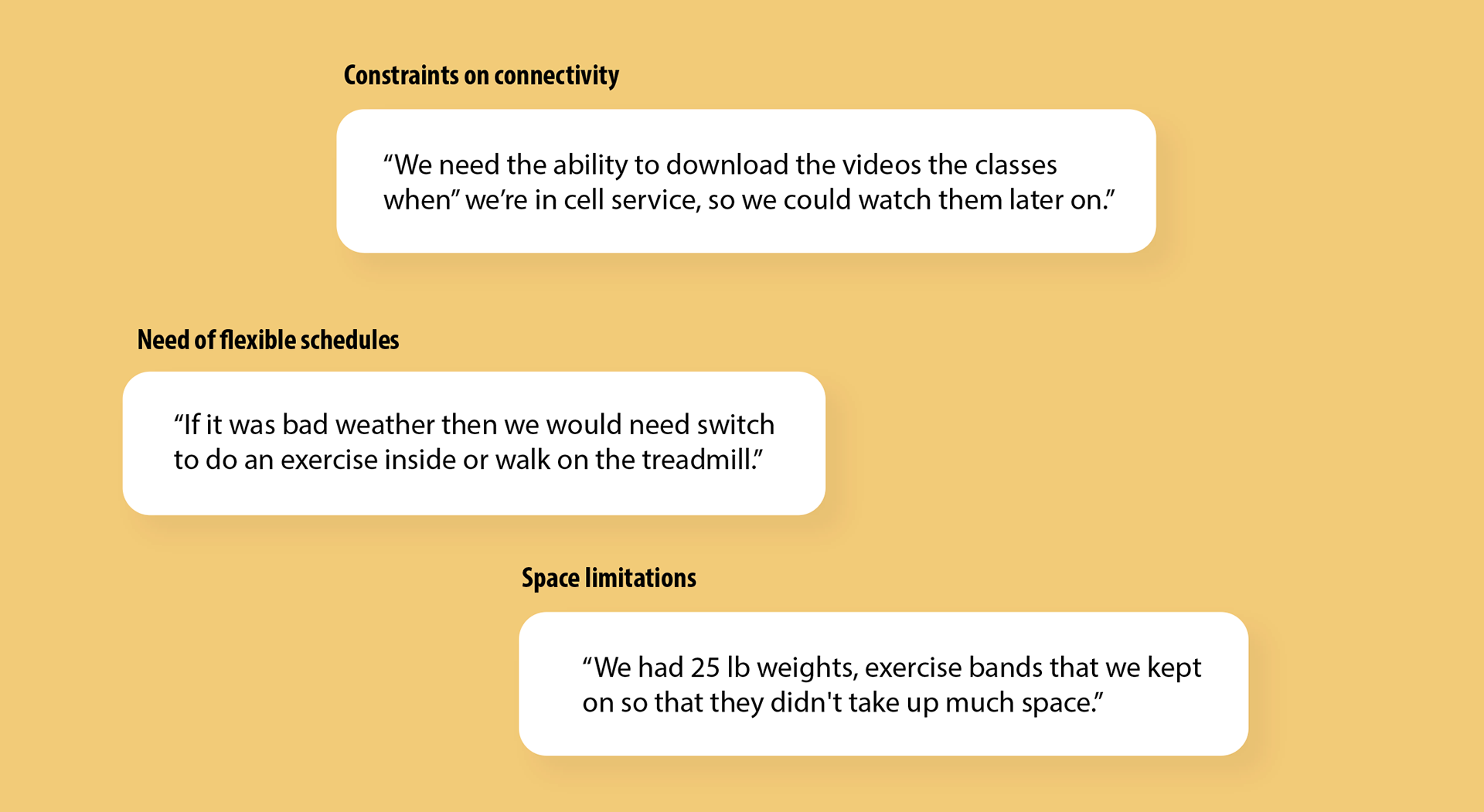
Quotes from user interviews

The Question: How might we create a fitness experience that supports healthy aging and strength-building for older adults living and traveling on the road?

04 Defining the UX Direction
Based on research findings, key UX recommendations included:
• Support offline access for workouts and downloadable content
• Design flexible workout plans based on space, equipment, and environment
• Prioritize simple, easy-to-follow workout structures and instructions
• Create optional community and accountability features without forcing social engagement
• Support long-term mobility, recovery, and healthy aging goals rather than performance-focused fitness
• Support offline access for workouts and downloadable content
• Design flexible workout plans based on space, equipment, and environment
• Prioritize simple, easy-to-follow workout structures and instructions
• Create optional community and accountability features without forcing social engagement
• Support long-term mobility, recovery, and healthy aging goals rather than performance-focused fitness
Information Architecture & Wireframes
I translated research insights into early product flows, wireframes, and interactive prototypes to help define the MVP experience and guide development discussions.
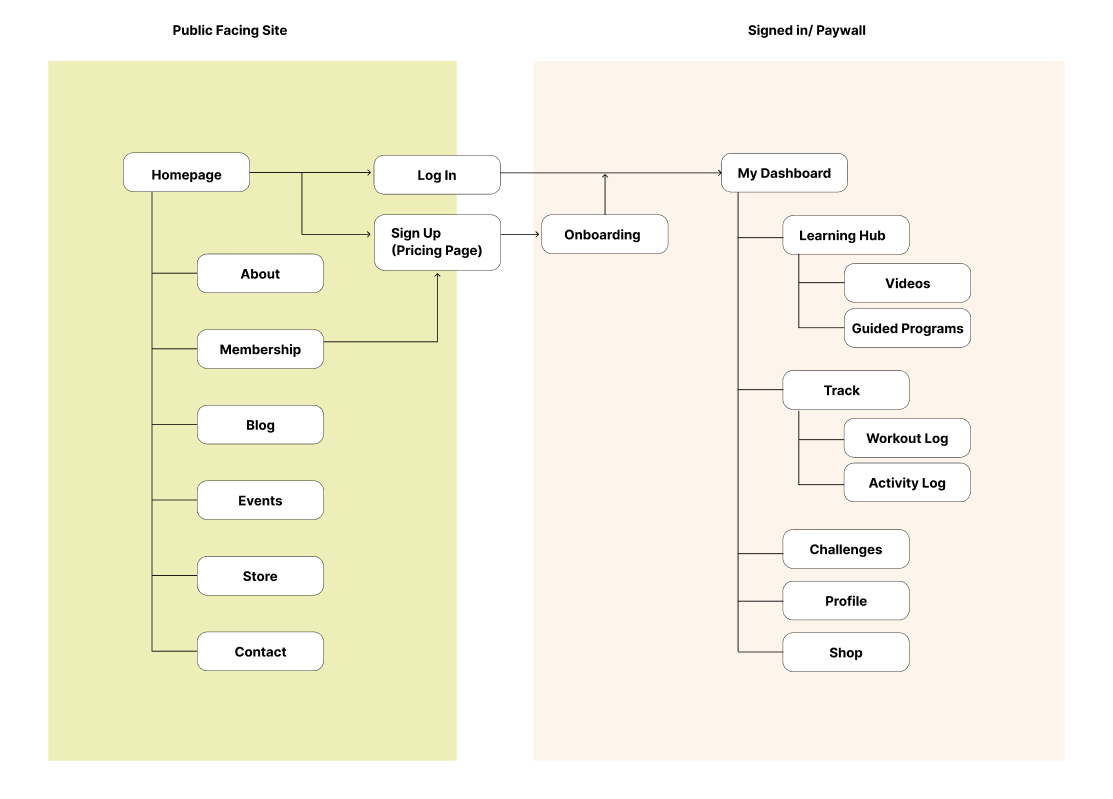
Active RV Platform Structure, including a public-facing site for marketing and the learning platform.
Key areas of the wireframe explored included:
• Adaptive workout filtering based on equipment and environment
• Workout onboarding and personalization flows
• Mobile-first workout experiences for on-the-go accessibility
• Offline content access and progress tracking concepts
• Adaptive workout filtering based on equipment and environment
• Workout onboarding and personalization flows
• Mobile-first workout experiences for on-the-go accessibility
• Offline content access and progress tracking concepts
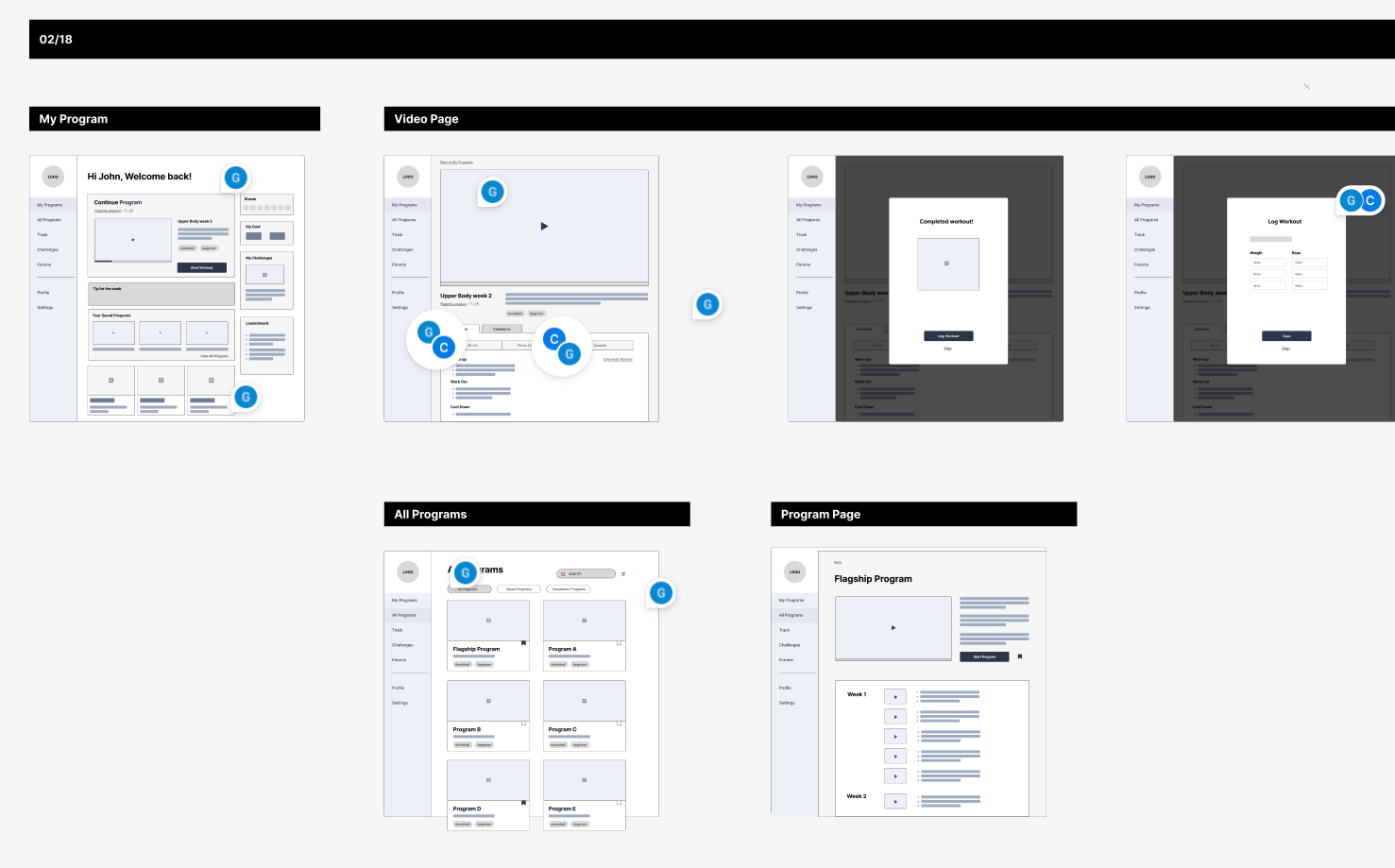
Early wireframes in Figma
Designing the Experience
Personalized Fitness Dashboard
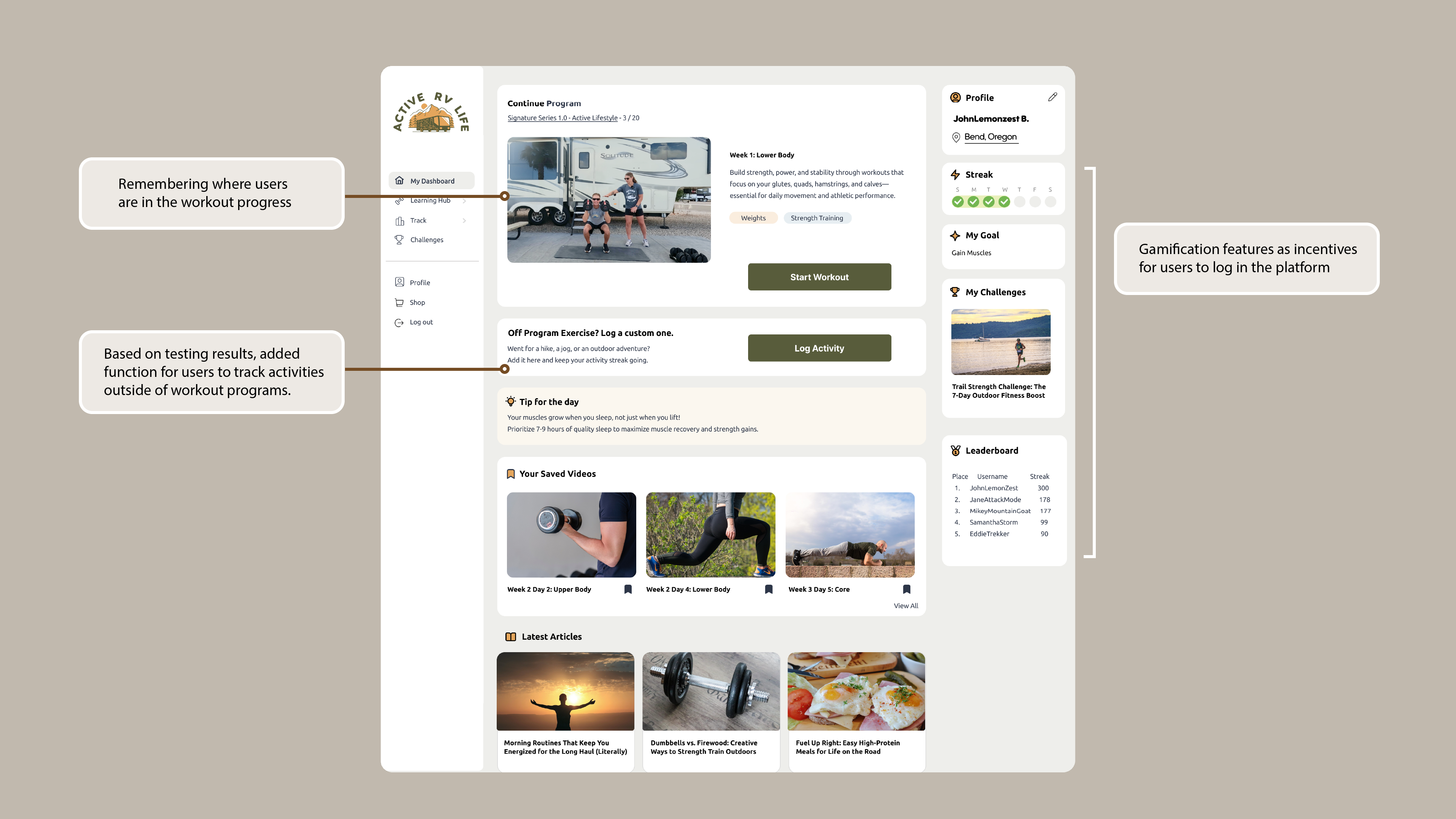
The dashboard experience was designed to help users quickly resume workouts, track progress, and stay motivated while navigating constantly changing road conditions. The layout prioritized simplicity, visibility, and flexibility, allowing users to easily access their current programs, saved workouts, educational content, and activity history from a single home screen.
Early concepts focused primarily on tracking progress within structured workout programs. However, user feedback revealed that many participants wanted more flexibility to log activities outside the platform’s predefined curriculum — including hiking, jogging, trail walks, and other outdoor activities that naturally fit their lifestyle. In response, we introduced a more visible and accessible custom activity-logging feature, allowing users to track their movement and maintain streaks even when exercising outside traditional workout plans.
Additional gamification features, including streak tracking, goals, and challenges, were also explored to encourage consistency and ongoing engagement without making the experience feel overly competitive.
Flexible Workout Library
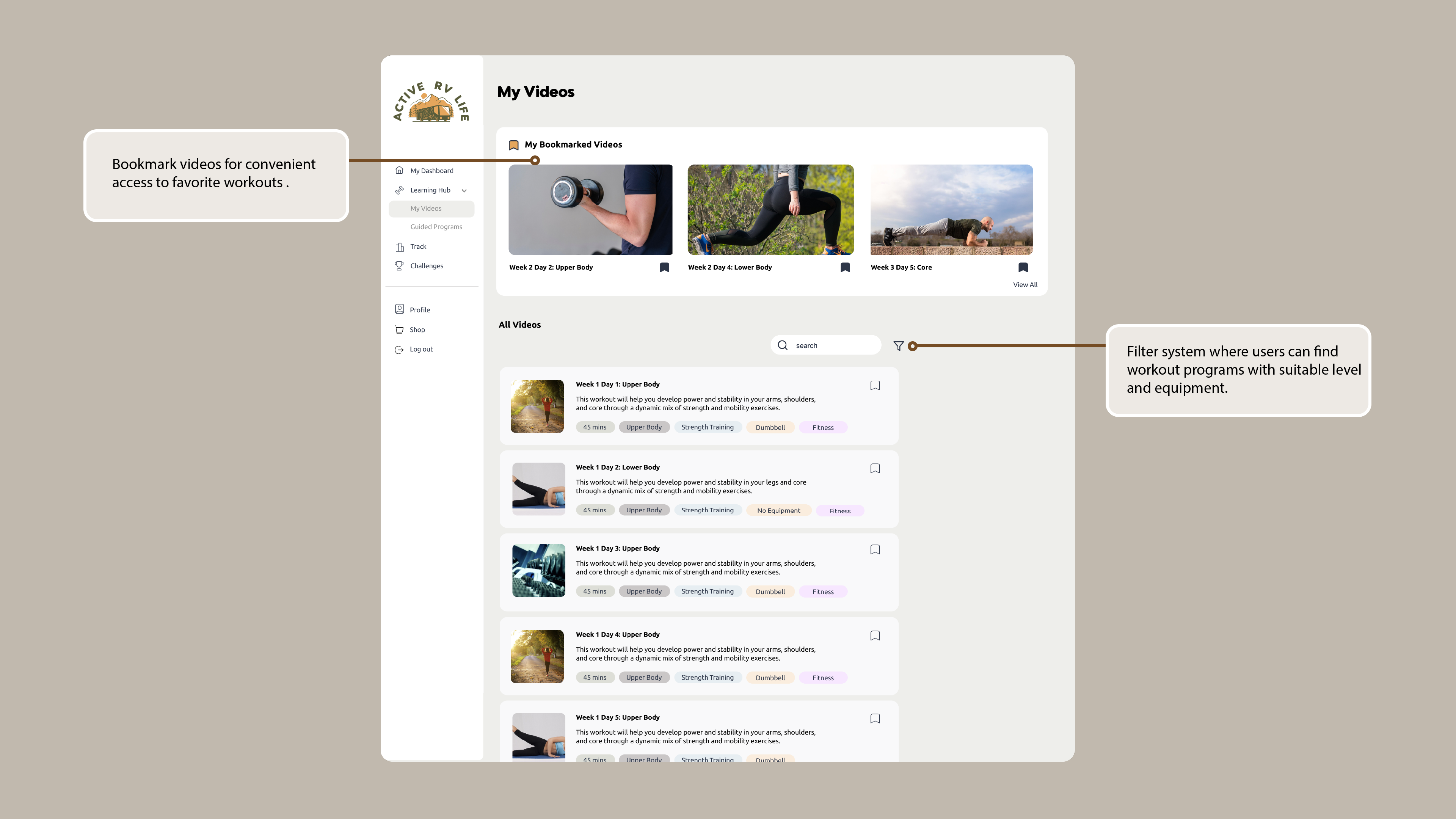
The workout library was designed to help users quickly discover fitness content that matched their environment, available equipment, and fitness goals while traveling on the road. Because users often exercised in unpredictable settings — from campgrounds to small RV interiors — flexibility and ease of navigation became key priorities during the design process.
To support this, the experience included filtering options for workout type, duration, equipment availability, and fitness focus, allowing users to find workouts that realistically fit their current situation. Bookmarking functionality was also introduced so users could easily save and revisit favorite workouts without needing to search repeatedly while traveling.
The structure prioritized quick scanning and lightweight decision-making, helping users spend less time navigating the platform and more time staying active.
Guided Workout Experience
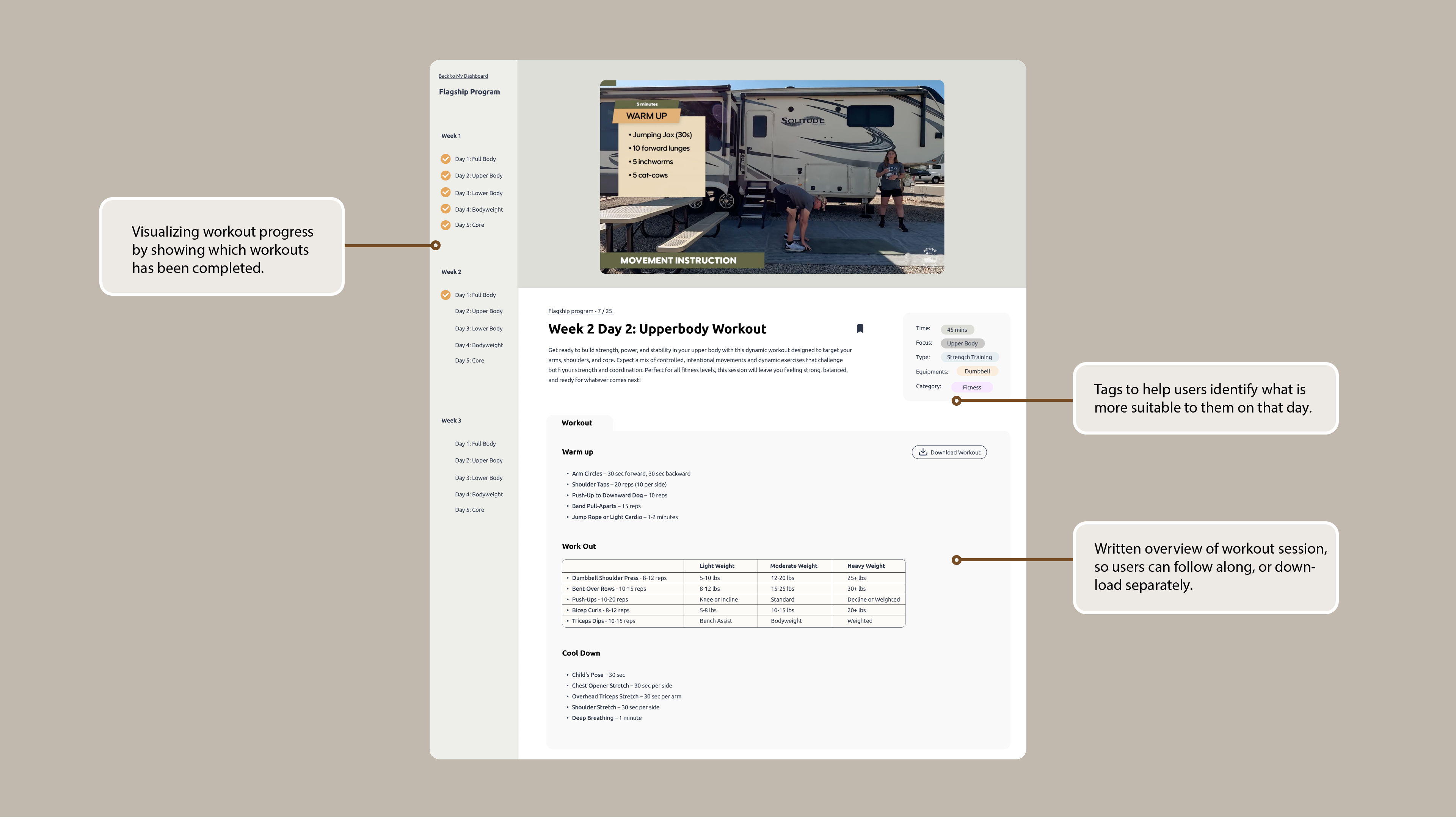
The workout experience was designed to balance structure and flexibility for users exercising in constantly changing environments. Each program provided a clear sense of progression, helping users visualize completed workouts and maintain momentum throughout multi-week training plans.
Workout sessions combined video guidance with written instructions and downloadable summaries, giving users multiple ways to follow along depending on their environment, internet access, or personal preference. Supporting both visual and written formats became especially important for users working out outdoors, in limited spaces, or with inconsistent connectivity.
To help users quickly determine whether a workout fit their current situation, sessions were tagged by focus area, equipment requirements, workout type, and duration. This lightweight filtering system allowed users to make quick decisions without needing to navigate through overly complex program structures.
05 Reflection
This project was especially fun because it introduced me to a lifestyle and set of challenges I had never deeply considered before. Through conversations with RV travelers and older adults pursuing active retirement lifestyles, I learned how dramatically the environment, mobility, and daily routines can shape how people approach fitness and health.
One of the most interesting challenges was designing for unpredictability. Unlike traditional fitness products built around stable routines and gym access, this experience needed to adapt to constantly changing environments, limited equipment, inconsistent connectivity, and a wide range of user preferences. Because the project moved quickly toward MVP exploration, many concepts focused on adaptability and prioritization rather than feature completeness. This pushed me to think carefully about what experiences would create the most value early on while still supporting long-term flexibility as the product evolved.
And on a personal note, while I wouldn’t have called myself a big exerciser before this project, spending so much time thinking about mobility, healthy aging, and active lifestyles definitely encouraged me to become more health-conscious and work out a little more myself!